Residential AV and Network
The Overview
This project required the fabrication and deployment of a 42U primary rack designed to serve a multi-floor residential home. The system needed to handle over 10 individual AES67 audio endpoints, amplifiers, complete centralized audio routing via Crestron NAXs, and a massive 8 x 8 video switching matrix spanning multiple meeting rooms and central control with Crestron Home.
The Challenge
The primary hurdle was extreme density. With four high-output amplifiers and a loaded Cisco network switch housed in a single rack, thermal management was a critical concern. Furthermore, a zero-tolerance policy for signal interference, requiring strict physical separation of low-voltage power lines and extra low-voltage CAT6a control networks.
The Engineering Solution
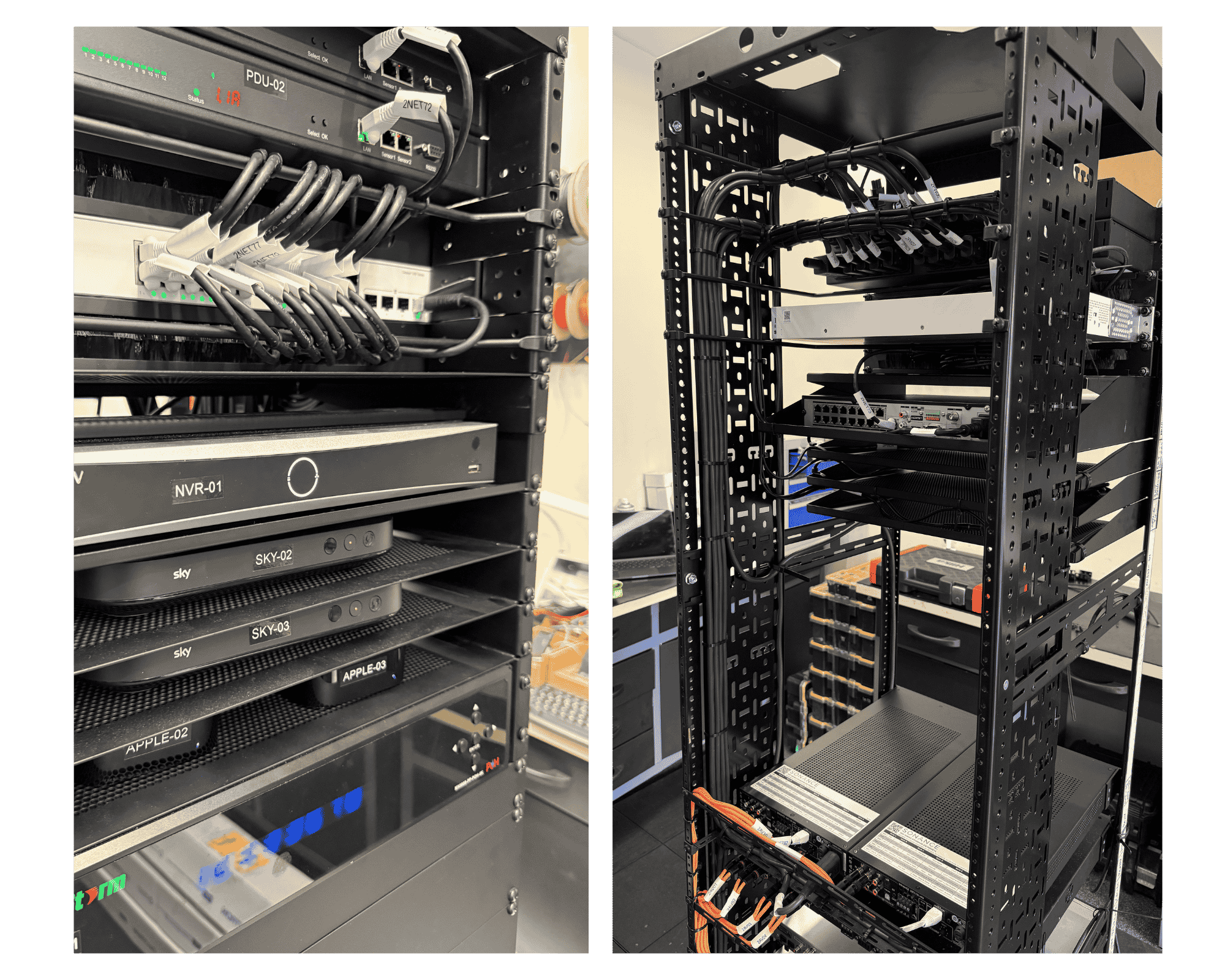
To address thermal throttling, I opted to use blanking panels and incorporated passive airways at the top of the rack to promote a forced‑air chimney effect, drawing cool air from the bottom. For cable management, I implemented customized rear lacing bars. All 230V power was routed cleanly down the left vertical channel, while all audio stream, control, and video signals were organized along the right. Spacing and separation were carefully planned to minimize crosstalk and preserve the low‑noise performance required for the video matrix.
Technical Details
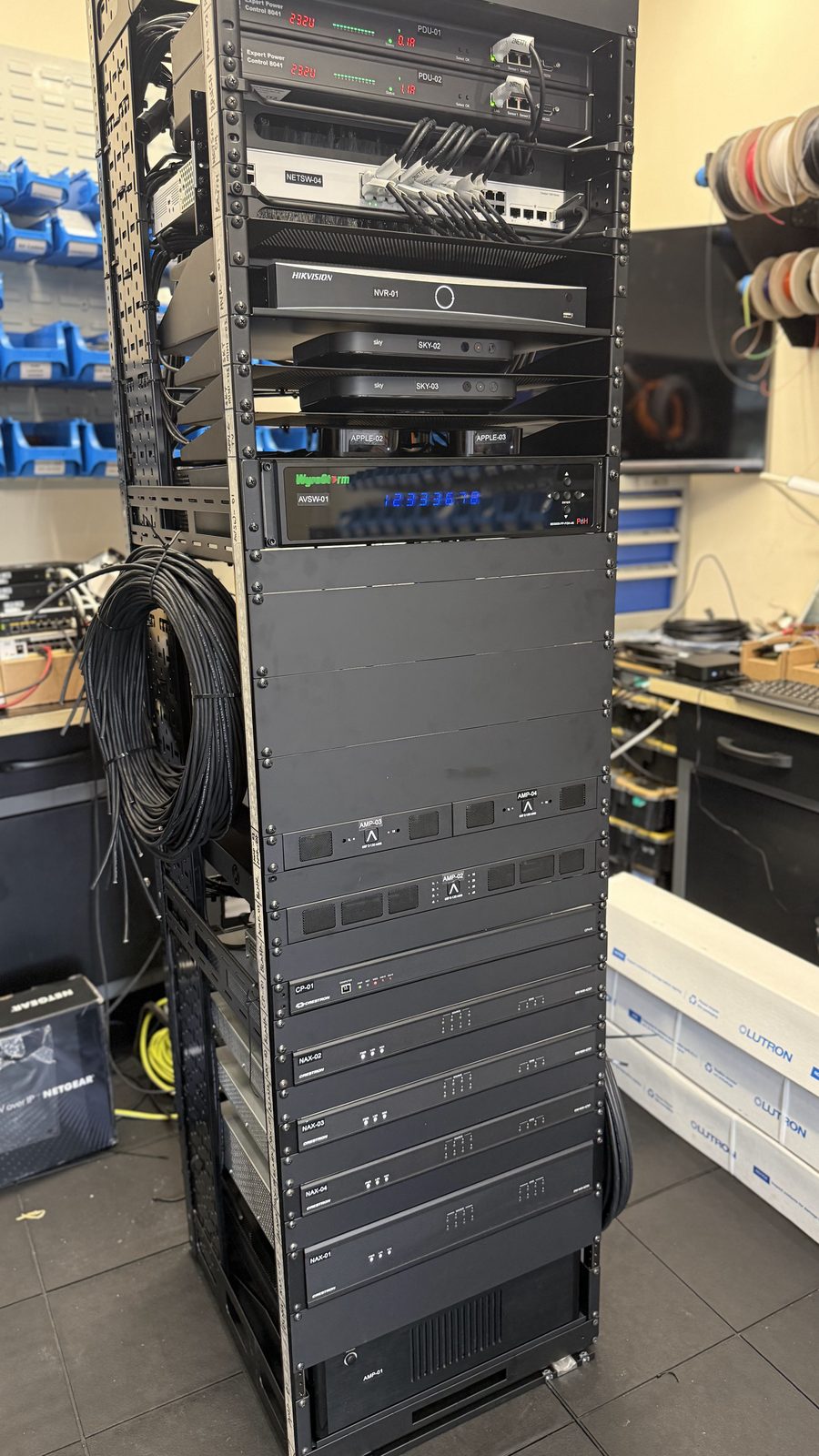
Fig 1. The full rack, with power and switching at the top, sources and video distribution below, then the amplifiers, Crestron processor and NAX units.
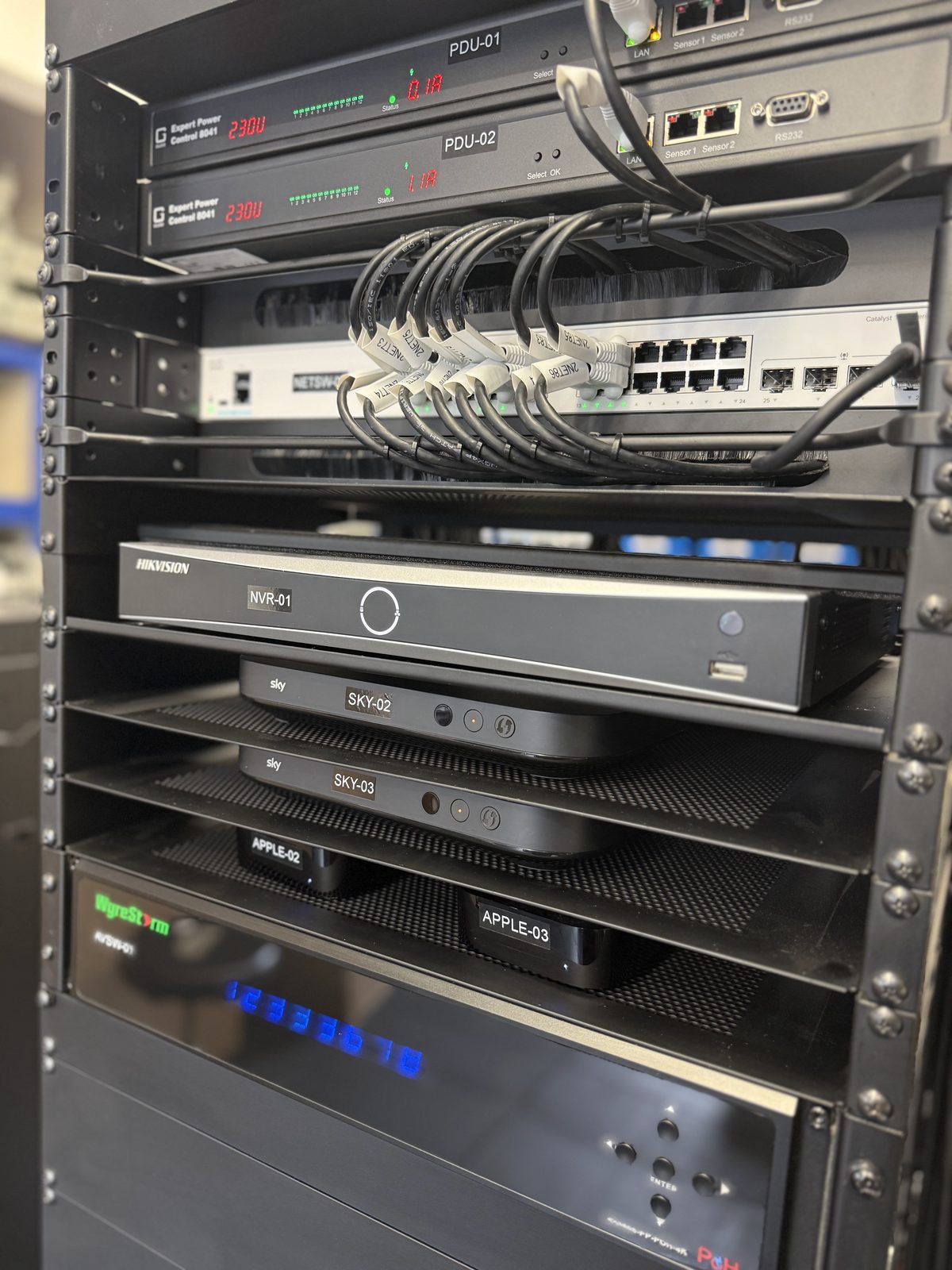
Fig 2. Power units, network switch, NVR and TV sources, each one labelled.
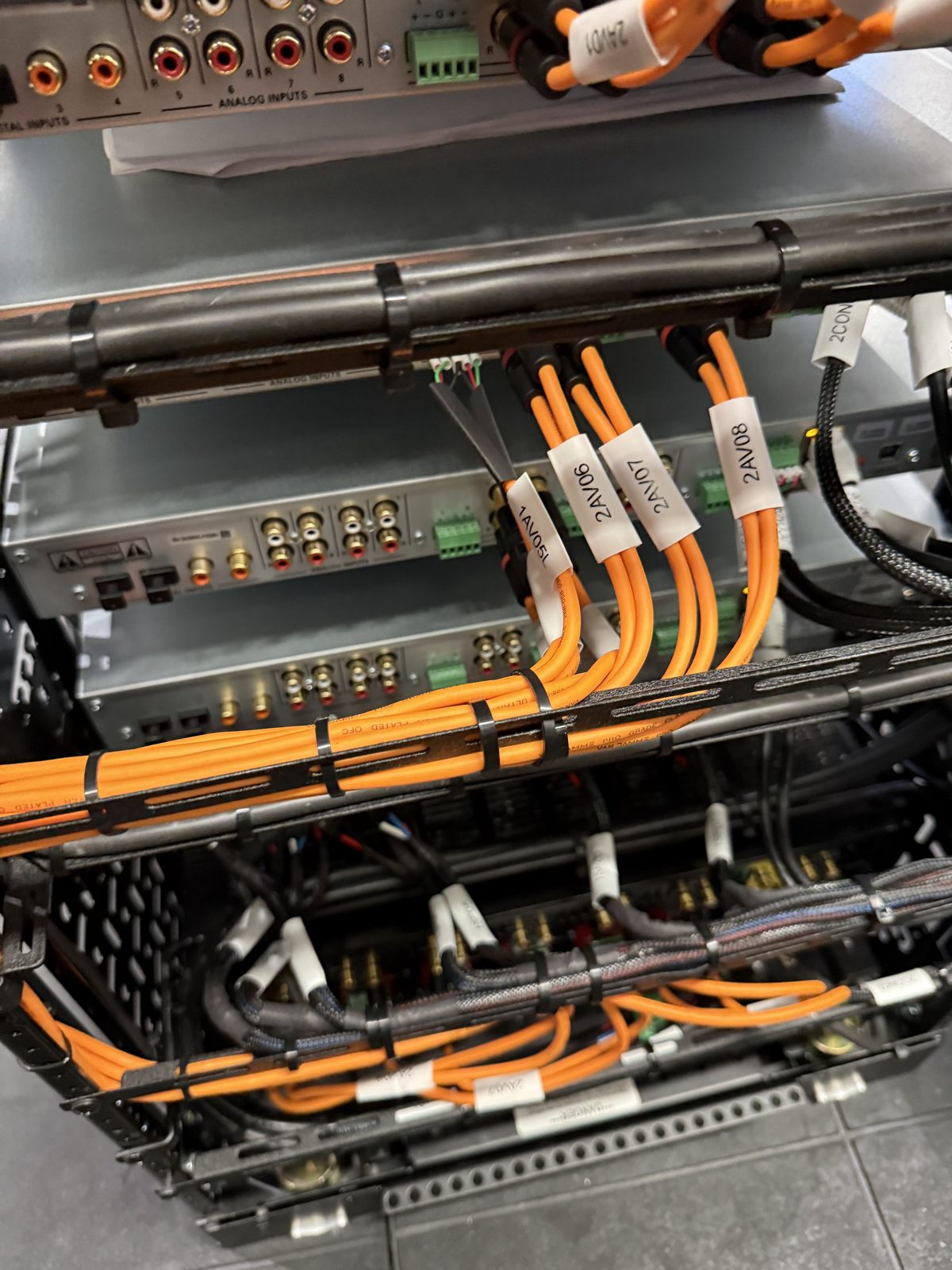
Fig 3. Amplifier outputs in speaker cable, labelled and dressed along the rear.
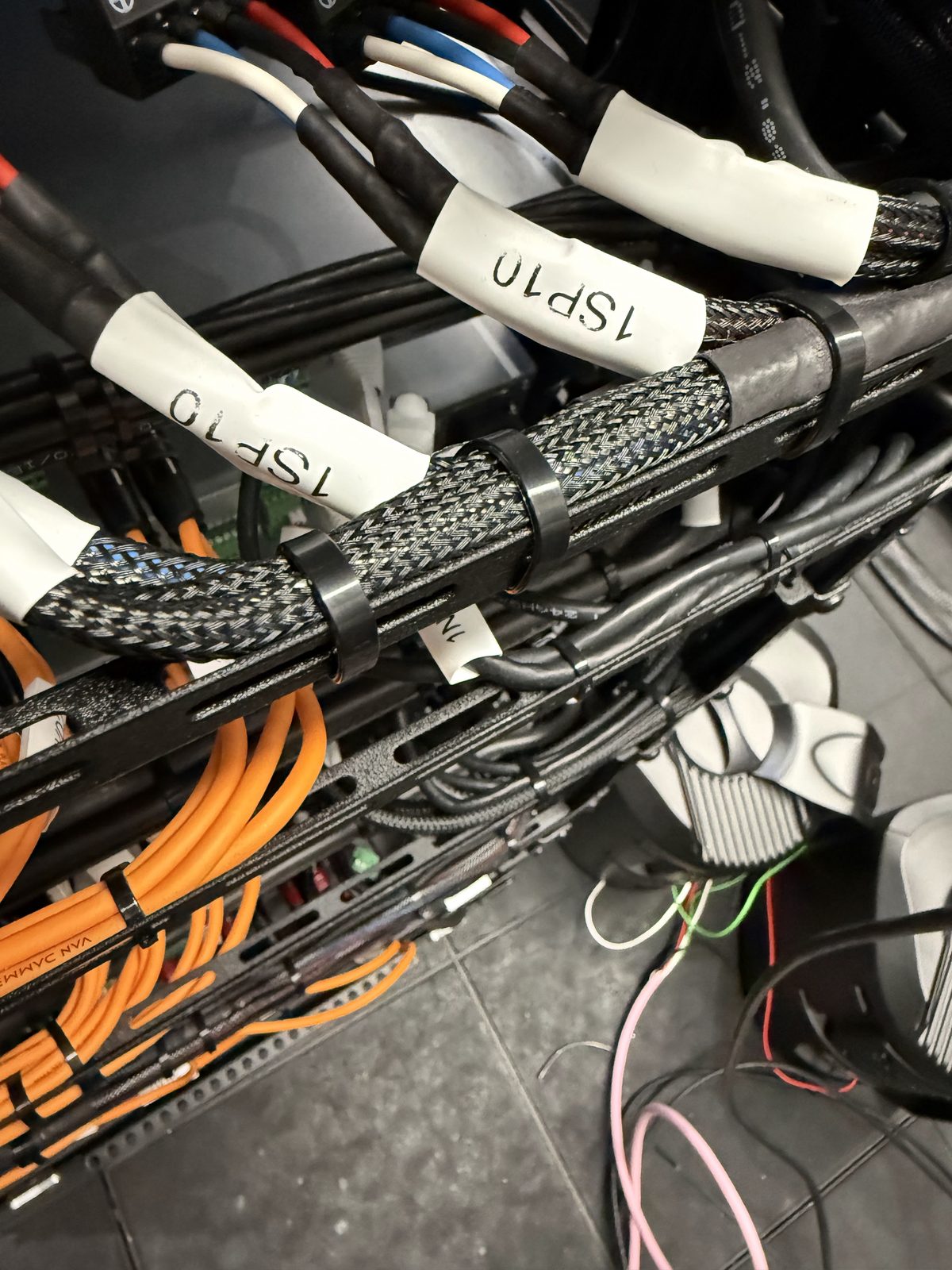
Fig 4. Speaker runs with heat-shrink labels, sleeved and tied to the lacing bar above the amplifiers.
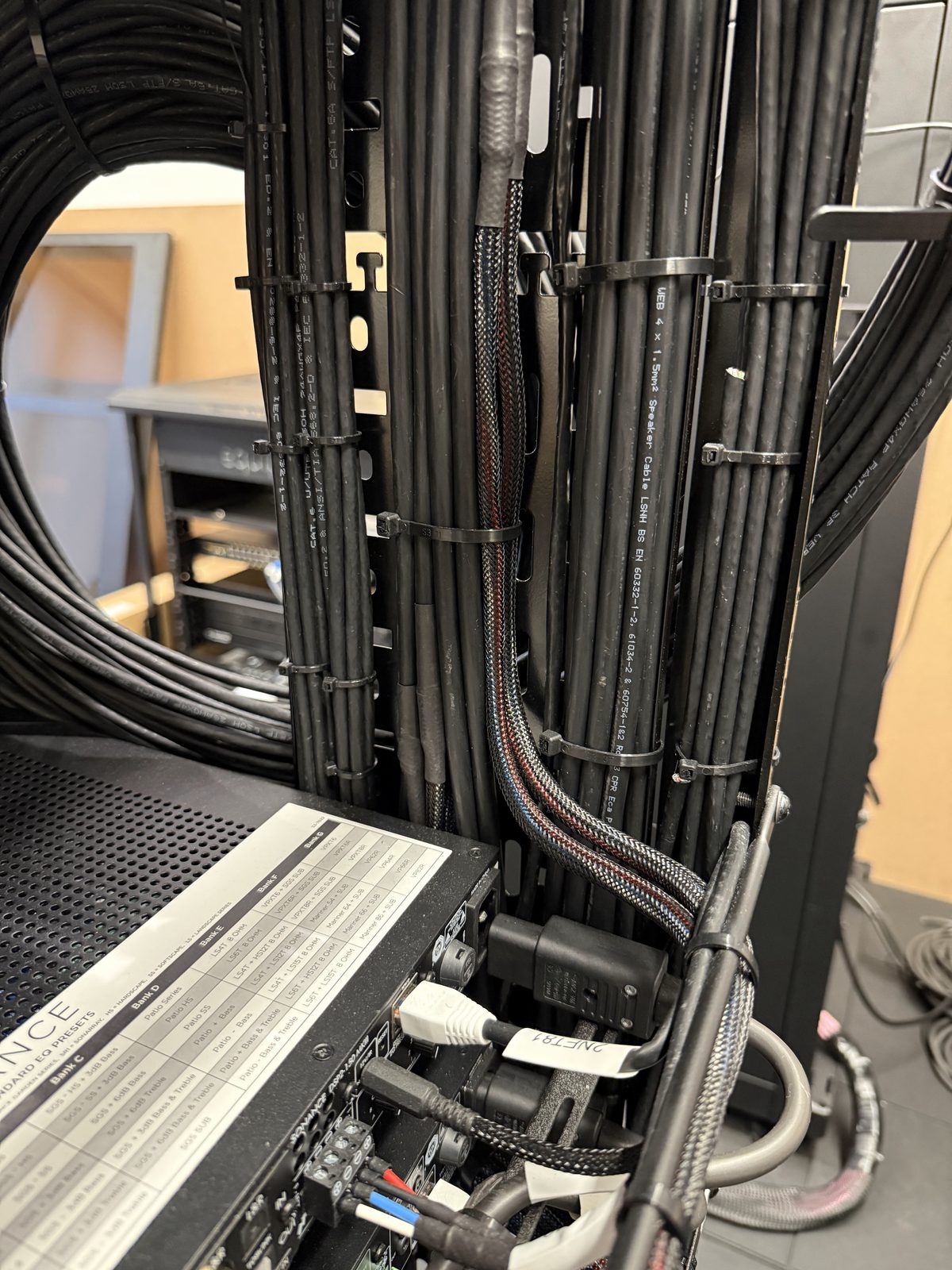
Fig 5. Vertical cable management, with speaker and data runs kept in separate bundles.