Afara: Automated Commissioning and Audit Tool
The Idea
Afara is Yoruba for “the bridge”. It bridges the gap between the design documents and the system that actually gets built.
On most systems integration projects, commissioning is still done by hand: an engineer logs into each device in turn, copies firmware versions, VLANs and port details into a checklist, saves configuration backups and then writes the report. It’s slow, and it depends on remembering every step on every device.
Afara treats the asset register (the spreadsheet every project already keeps, with its references, systems, rooms and addresses) as the source of truth, and checks the real equipment against it. It has been used on real projects, producing commissioning evidence in 10 to 20 minutes instead of about a day by hand.
Where It’s Used
- Before the rack leaves the workshop: confirm it’s ready for site.
- During commissioning on site: see straight away which devices are online and configured as designed.
- After handover: check an existing system on a maintenance visit, and spot equipment that has started dropping off.
Version 2: From a Tool to a Platform
In November 2026 I started version 2. It’s a step up, not a restart: it builds on what the first version proved, and makes Afara stronger, safer and ready to run all the time, so it can look after a system for its whole life rather than only during commissioning.
Working in Version 2
Built and tested in my lab.
- The asset register, checked before it’s saved. Upload the spreadsheet and Afara shows a report of what it found before anything is stored: the same reference used twice, two devices sharing an address, placeholder references, addresses it can’t read, and items still missing details before handover.
- Security from the start. Sign-in with an activity record. Device passwords in the register are never stored: Afara keeps only a fingerprint, so it can tell you a password changed without knowing it. Uploaded registers are stored encrypted.
- Monitoring that knows “down” from “not installed yet”. A device is marked offline after three missed checks in a row, so one dropped reply on busy Wi-Fi doesn’t raise an alarm. Kit that hasn’t answered since it was added shows as not seen yet, never as offline, so a half-built site doesn’t look broken. In the lab unplug test, a device went offline after about three minutes and came back as soon as it was plugged in again.
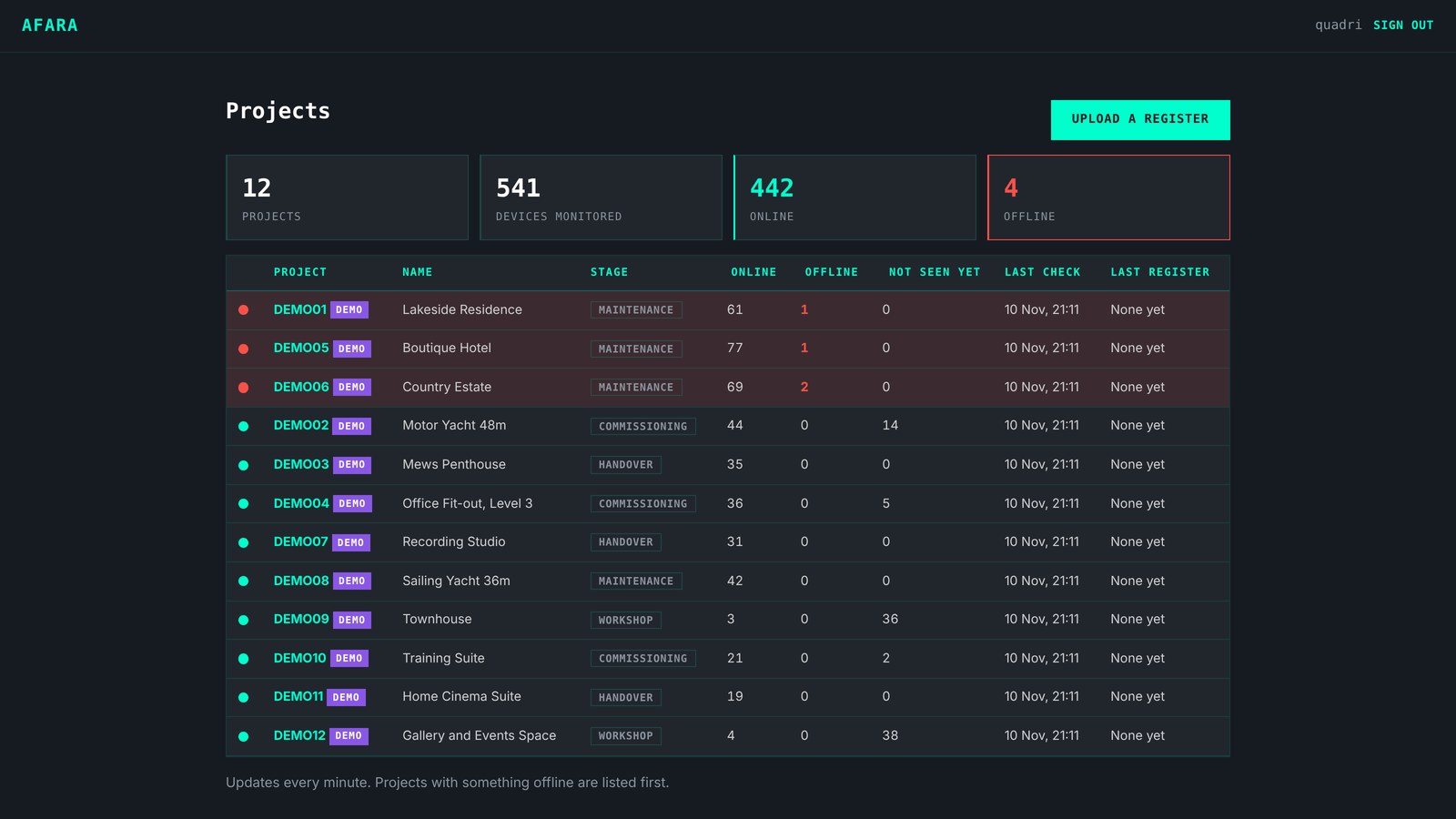
- Every project at a glance. One page lists every project, with anything offline at the top. Inside a project, kit is grouped the way engineers think about it: network, Wi-Fi, control, audio, video, lighting and building systems. Pages update every minute.
- A history for every device. How fast it answers, a graph of every check, and a bar for each of the last 30 days, so “has this been dropping off?” gets an answer with evidence instead of a guess.
- Always on. Afara runs on its own locked-down hub in my lab, reached over a private network with HTTPS. Nothing is open to the internet.
- Light and dark, in my own brand. The same colours and type as this website, with a switch for light or dark. Light reads better in a bright plant room; dark is easier on the eyes late at night.
- Demo projects. Twelve made-up sites with simulated monitoring, clearly marked DEMO, so Afara can be shown without any real site data. The pictures on this page come from them.
What’s Coming
- Alerts on my phone the moment equipment on a site drops off.
- Workshop to handover to maintenance: the same register followed through every stage, from what’s still to do in the workshop to what has changed since handover.
- Talking to the equipment, not just checking it answers: reading serial numbers, firmware and configuration straight from switches first, then control and lighting systems, and checking them against the register.
- Configuration you can trust: backups taken automatically and compared against the approved handover state, so changes are spotted before they become faults.
- Evidence without the paperwork: commissioning reports, as-built records and maintenance reports produced from the live data. The network map and reports from the first version are coming back in version 2, stronger.
- Approval before change: where Afara could fix something, it will propose the fix and wait for an engineer to approve it.
Source code is in a private GitHub repository and available to review on request.
Technical Details
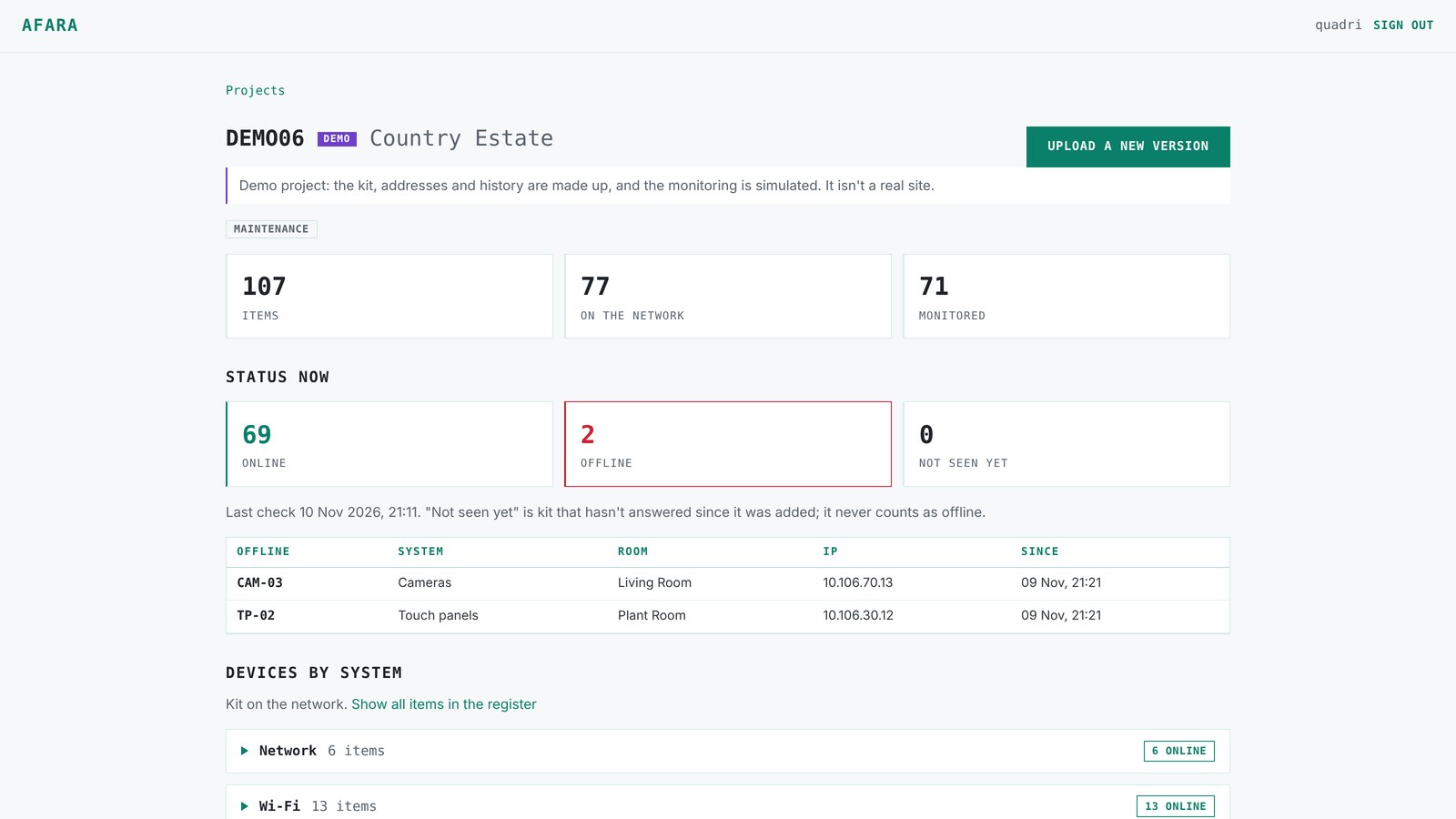
Fig 1. One project at a glance, in the light theme. What's offline is listed first, then kit grouped by system. Demo data.
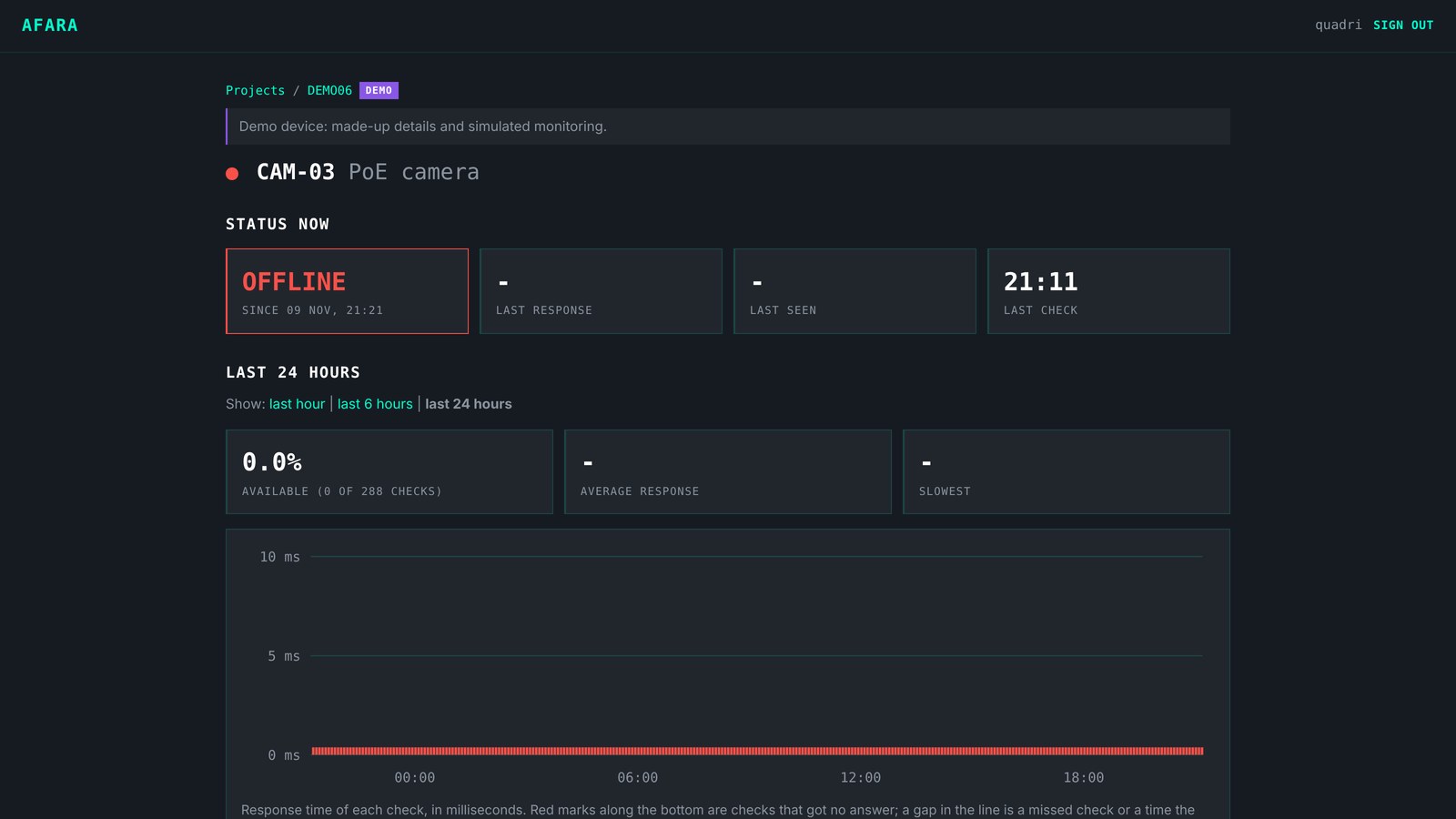
Fig 2. A device's own page. This demo camera has missed every check today, shown as red marks along the graph. Demo data.